

Quick Answer
ChatGPT for Teens adds stronger safeguards and learning-focused tools for eligible users ages 13 through 17. OpenAI began a gradual global rollout on August 18, 2026, and says availability will expand over roughly two weeks. Parents can link accounts and manage selected settings, but cannot read conversations. Families should review the controls together and keep ChatGPT separate from urgent mental-health support.
Key Takeaways
- ChatGPT for Teens activates automatically when OpenAI identifies an account holder as under 18.
- OpenAI says the teen experience applies stronger restrictions to self-harm, suicide, romantic, and sexual conversations.
- Study Mode, quizzes, visualizations, and homework reminders are designed to steer teens toward learning rather than answer copying.
- Parents can link accounts, set Quiet Hours, and manage features such as voice mode and group chats.
- Parents cannot read teen conversations, except that OpenAI may send limited safety information in rare serious-risk situations.
What is ChatGPT for Teens?
ChatGPT for Teens is OpenAI’s age-specific ChatGPT experience for eligible users ages 13 through 17. OpenAI began rolling out the experience globally on August 18, 2026, according to the company’s ChatGPT for Teens Help Center page. The company says the rollout is gradual and may take roughly two weeks to reach all eligible accounts.
ChatGPT for Teens activates automatically when account information, a self-reported age, or OpenAI’s age-prediction system indicates that an account holder is under 18. OpenAI does not require formal ID verification for teens to receive the protections. Adults who want protections removed face a different process, which requires age verification.
The central change is not a separate app or subscription tier. ChatGPT for Teens is a modified experience within ChatGPT that applies additional safety limits and learning-oriented features. The practical response is to check whether the account has received the experience before assuming every listed control is already available.
How does ChatGPT for Teens restrict sensitive conversations?
ChatGPT for Teens applies stronger protections to sensitive conversations involving suicide, self-harm, and romantic or sexual topics. The Washington Times report, based on Associated Press coverage says the teen version is tailored for users ages 13 through 17 and includes stronger content restrictions in those areas.
ChatGPT for Teens also prevents the chatbot from suggesting that it has personal feelings, consciousness, or emotions, according to OpenAI’s description of the new protections. The limitation matters because a teenager can interpret relational language from an AI system as evidence of attachment or understanding, even though the system does not have personal experiences or feelings.
OpenAI child-development lead Allison Mishkin said the company identified model cues that could contribute to a teenager developing a relationship with the chatbot. ChatGPT for Teens can reduce those cues, but the protections do not make an AI conversation a substitute for a trusted adult, clinician, or emergency service. Seek immediate help from local emergency services or a qualified professional if a teen is in immediate danger.
Which ChatGPT for Teens safety features matter most?
ChatGPT for Teens combines content limits, AI-use reminders, and account-level controls to reduce predictable risks. Reuters reported that the product includes educational features and parent notification options for certain high-risk situations. The protections matter because teen safety involves both what the chatbot says and how long, when, and under what household rules a teen can use the service.
| Feature | What OpenAI says it does | What families should understand |
|---|---|---|
| Stronger content protections | Restricts certain sensitive conversations involving self-harm, suicide, romantic, and sexual content. | Restrictions reduce exposure to harmful responses but do not replace real-world support during a crisis. |
| AI-use reminders | Prompts teens to take a break every 90 minutes and reminds them they are interacting with an AI tool. | Reminders can encourage healthier use, although families still need their own screen-time routines. |
| Quiet Hours | Lets linked parents set times when ChatGPT cannot be used. | Quiet Hours can support homework, sleep, and family routines without giving parents access to chats. |
| High-risk notifications | May notify parents in rare cases involving possible serious safety risks, including new eating-disorder-related notifications. | Notifications provide limited safety information, not a complete record of a teen’s conversations. |
ChatGPT for Teens also arrives at a time when AI safety and data handling are receiving closer scrutiny. Families who already discuss suspicious messages and account security can apply the same caution to AI tools, particularly when a teen receives an unexpected request or shares personal information. A recent report on AI-assisted scam warnings illustrates why young users need clear rules for handling unfamiliar online conversations.
How do ChatGPT for Teens study tools work?
ChatGPT for Teens is designed to steer students toward working through schoolwork instead of simply receiving completed answers. Axios reported that the teen experience includes Study Mode and responsible homework reminders that can detect when a teen appears to be trying to bypass an assignment. That approach matters because a chatbot can be useful for practice and explanation while still undermining learning when it becomes a shortcut.
ChatGPT for Teens also includes quizzes, learning visualizations, and designated Study Hours, according to Axios’s feature breakdown. Study Mode is intended for guided learning, while quizzes and visualizations offer different ways to practice a subject. The tools can support review, but a student still needs to verify facts with class materials and follow a teacher’s assignment rules.
ChatGPT for Teens cannot determine whether every school permits AI assistance for a particular assignment. The most sensible approach is to use the tool for explanations, practice questions, outlines, and feedback, then complete the assigned work independently when a teacher requires original work. Students using other AI systems should apply the same care when comparing tools such as Google’s coding-focused AI features.
What can parents control in ChatGPT for Teens?
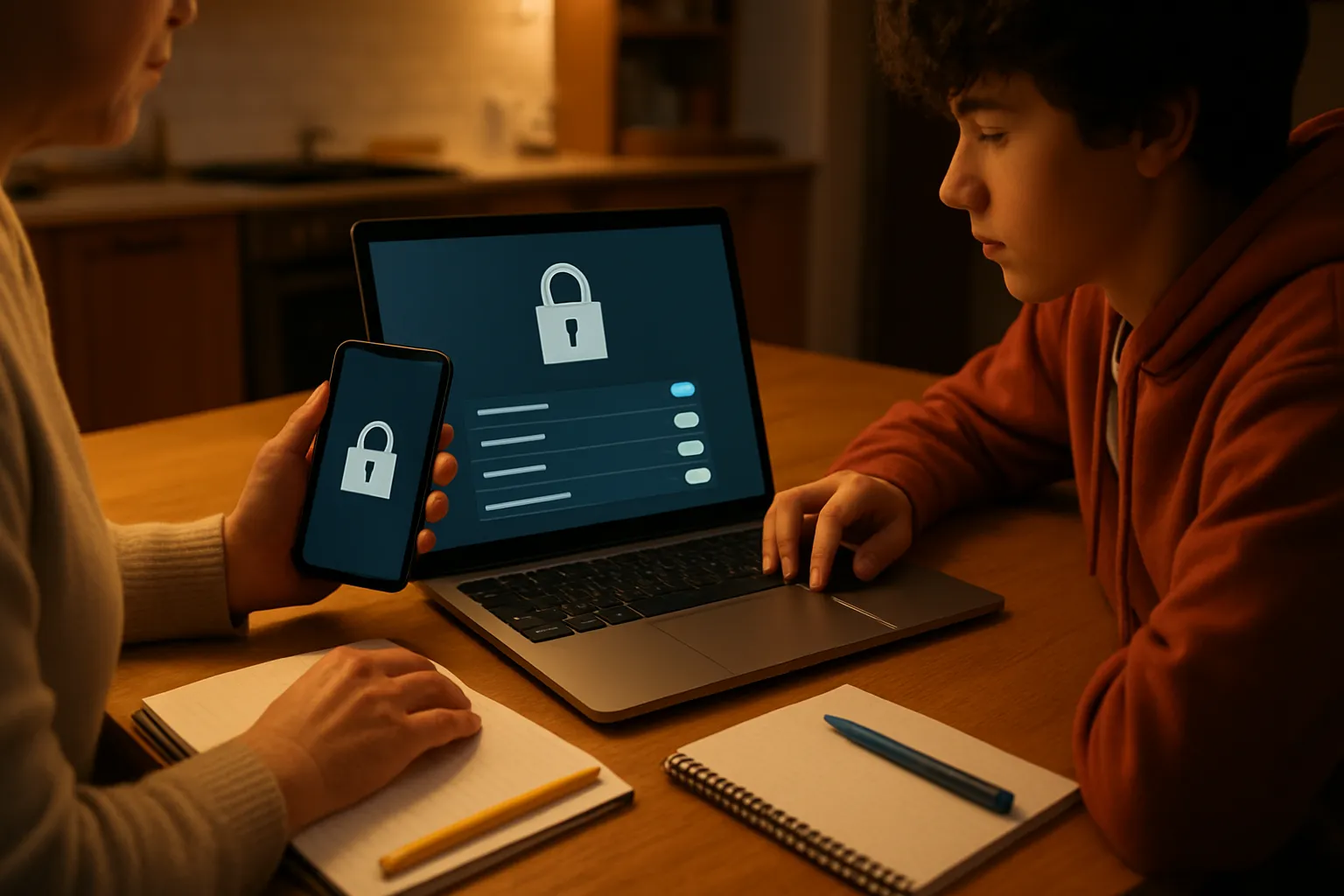
ChatGPT for Teens gives guardians account-linking controls that can limit selected features and usage times. OpenAI’s parent resources page says parents can choose which features are available, including voice mode and group chats, and can set times when ChatGPT cannot be used.
ChatGPT for Teens also allows linked parents to set Quiet Hours and manage certain settings. Reuters reported that parents can receive notifications in high-risk situations, including new notifications related to eating disorders. These controls can help a family set routines around homework time or bedtime, but they work best when the teen understands why the limits exist rather than viewing them only as a technical restriction.
Parents should begin by linking the appropriate accounts, reviewing the available feature settings, and agreeing on clear household expectations. Set Quiet Hours for times when ChatGPT use would interfere with sleep, schoolwork, or family responsibilities. Stop and contact OpenAI support if account linking, age classification, or a safety notification appears incorrect, because changing settings cannot resolve an account-level problem on its own.
Can parents read ChatGPT for Teens conversations?
ChatGPT for Teens does not give parents access to a teen’s conversations. OpenAI states that parents cannot read chats through the parental-control system, which preserves a measure of privacy for teens while still allowing guardians to manage selected account features and schedules.
ChatGPT for Teens may notify parents in rare situations where OpenAI’s systems and trained reviewers detect possible signs of serious safety risk. OpenAI says those notifications contain only the information needed to support the teen’s safety, not a complete conversation history. The privacy limit matters because a parent should not assume that parental controls provide comprehensive monitoring.
Families should discuss privacy directly before relying on the feature. A teen should know that ordinary chats are not visible to parents through the controls, while serious safety concerns can trigger limited notifications. Families should also avoid putting highly sensitive personal, financial, medical, or account-security information into any chatbot, because privacy settings do not turn an online service into a private diary.
What should families do before using ChatGPT for Teens?
Families should set expectations before ChatGPT for Teens becomes part of schoolwork, entertainment, or daily communication. OpenAI’s rollout is still expanding, so an eligible account may not show teen-specific features immediately. The company says availability will continue to grow over the coming weeks, which means settings and access can change after the initial launch.
ChatGPT for Teens works best with 4 family rules. The rules are using the tool to learn rather than copy, keeping private information out of prompts, taking the 90-minute break reminders seriously, and telling a trusted adult when a conversation becomes upsetting or confusing. These rules address the limits of the product without requiring a parent to inspect every ordinary chat.
- Check whether the teen account has received the teen experience and review the available settings.
- Link a parent account if the family wants Quiet Hours, feature controls, or high-risk notifications.
- Set boundaries for homework use, including when AI can help explain material and when assignments require independent work.
- Review privacy expectations and instruct the teen not to enter passwords, financial details, medical records, or identifying information.
ChatGPT for Teens is one part of a broader safety conversation, not a complete solution. Families should also review account-security habits, especially as AI-related data risks continue to expand. Reporting on rising data-breach risk shows why limiting sensitive information remains a practical precaution across online services.
FAQ
Is ChatGPT for Teens available now?
ChatGPT for Teens began rolling out globally on August 18, 2026, for eligible users ages 13 through 17. OpenAI says the gradual rollout may take about two weeks, so some eligible accounts may not have the experience yet.
Does ChatGPT for Teens require ID verification?
ChatGPT for Teens does not require formal ID verification for teens to receive its protections. OpenAI says the experience can activate through account information, self-reported age, or its age-prediction system.
Can parents see ChatGPT for Teens chats?
ChatGPT for Teens does not let parents read a teen’s conversations through parental controls. OpenAI may send limited information in rare cases where its systems detect possible signs of serious safety risk.
What are Quiet Hours in ChatGPT for Teens?
ChatGPT for Teens Quiet Hours let linked parents set times when the teen cannot use ChatGPT. Families can use the setting to support routines such as homework time, bedtime, or other agreed limits.
Can ChatGPT for Teens do homework for students?
ChatGPT for Teens is designed to steer students toward working through schoolwork rather than bypassing assignments. Study Mode, quizzes, visualizations, and responsible homework reminders can support learning, but students still need to follow their teacher’s rules.